Menu

Also recommended are Felix Aprahamian's stirring sleeve notes for the 1970 and 1996 reissue of the legendary EMI recordings, available to read here.
Alexandra Palace was built as North London's answer to the Crystal Palace, which was built in Hyde Park for the 1851 Exhibition, then transferred to Sydenham Hill. Pride of place was given to a grand concert organ by 'Father' Henry Willis, one of the most famous of the Victorian organ builders.
Specification of the 1873 instrument
Some three weeks after opening, the Alexandra Palace burned to the ground together with the Willis Concert Organ. Father Willis tried vainly to save some portions of the organ, at great risk to his own life.
A new Alexandra Palace was opened, its new Great Hall containing a new Willis Grand Concert Organ, which Father Willis thought to have been his best work.
Photographs and specification of the 1875 instrument
After various alarms about closure, the Park, Palace and the Organ were saved for the people.
The First World War saw first refugees, then internees housed in the grounds. The organ was extensively vandalised by soldiers celebrating the armistice.
An Organ Restoration Committee was set up. When Queen Alexandra, widow of Edward VII, died, the fund was dedicated to her memory.
An article in The Rotunda describing progress towards restoration.
December saw the grand opening of the restored organ, to universal acclaim. It was not long after this that Marcel Dupr "the greatest organist of his day", giving his first recital on the organ, called it "The finest Concert Organ in Europe".
Extensive photographs and details of the triumphant restoration.
Henry Willis III's detailed article in The Rotunda.
The EMI recordings which were to become legend are made by Marcel Dupre, G.D. Cunningham and Reginald Goss-Custard. Even today, they give us the best evidence of the astounding tonal success of the Alexandra Palace Organ.
Details and samples of the vintage recordings.
An Appeal was launched in 1937 leading to the pitch being lowered to modern concert pitch, the cost being met by the proceeds from a grand Handel Festival conducted by Sir Henry Wood before an audience of 5,000.
Appeal documents and photo of Henry Willis III working on the organ.
A V1 Flying Bomb blew out the Rose Window behind the organ, and although the organ wasn't badly damaged by the blast, it soon was by the weather. Years of neglect followed.
Following WWII damage, the instrument was dismantled for storage at The Palace.
Photographs of part of the dismantled instrument, the facade, and the scaffolded hall.
The Alexandra Palace Arts Society was formed. At its first "Messiah" with the London Philharmonic Orchestra, a choir gathered from all over England and Wales, and with Yehudi Menuhin giving his services as conductor, before a very large audience, proved the GLC wrong on both counts. The concerts were repeated in 1971 and 1973.
Once again, thoughts were turned to restoration. The GLC would not allow further work to be carried out and tried to sell the organ.
Scan of the advertisement for sale.
Henry Willis 4, great-grandson of the original builder, succeeded in buying the organ from the GLC "on behalf of the nation", to prevent further deterioration. He prudently removed some of the pipes to his workshop for safe keeping, but the GLC ruled that the casing and the dominating pipes from the 32 foot pedal diapason had to stay.
Photographs of the facade and the concerts.
EMI produced an LP of pre-war performances on the Alexandra Palace organ by great organists of their day.
The Alexandra Palace Arts society raised sufficient funds for a symbolic handover of a cheque for £1,000.
Photographs of the handover and the terrible state of the organ in 1980.
The Palace was sold by the GLC to Haringey Council for the nominal sum of £1, but almost immediately came the disaster of the fire which destroyed the Great Hall, including what remained of the organ.
Photographs of the devastation caused by the fire.
A public inquiry after the fire left no doubt that they wanted the Palace rebuilt, they wanted the Great Hall rebuilt and they wanted the organ rebuilt. The problem was money. The Palace, including the Great Hall, were to be rebuilt from the insurance money, but not the organ.
At this point the Alexandra Palace Arts Society reformed itself, under the chairmanship of Felix Aprahamian, into the ALEXANDRA PALACE ORGAN APPEAL (APOA)
Restoration work began at the Palace. In the Willis factory in Petersfield, the surviving parts of the Alexandra Palace Organ were restored by the great-grandson of the original builder.
Photographs of the Palace and parts of the organ in the Willis factory.
The Great Hall and organ gallery took shape whilst in the Willis factory at Petersfield the fourth incarnation of The Alexandra Palace organ was assembled.
Photographs of the Palace and the reassembled organ in the Willis factory.
The organ is installed on the Gallery.
Photographs of the organ in the Great Hall.
The partly rebuilt Alexandra Palace Concert Organ sounded again to its public, thanks to all those who had donated so generously to the Appeal. Those who were there will never forget that moment. The owners of the partially restored organ are now the Palace Trustees, but they still depend upon the Appeal to raise the funds.
Details and photographs of the re-opening concert.
Henry Willis 4 wrote about the special problems which the chosen strategy - piecemeal restoration - caused.
Henry 4's text.
Work on the organ continued with a grant from the Foundation for Sport and the Arts of £30,000 towards completing the Choir section. The choir organ was now complete, but several stops were loaned by the organbuilder due to a funding shortfall.
A grand dinner was held in the new double-width, double-height Swell box to celebrate its construction. A new humidification system was installed to combat the climatic conditions in the hall.
Mirabilis remastered the EMI LP of the pre-war recordings onto CD, EMI generously waiving their copyright so that the Appeal could raise funds towards restoration.
Details and samples of the Mirabilis remaster of the vintage recordings.
Following a very successful concert season, the appeal published some sound samples from the live recordings.
Live recordings

In 1873, the renowned organ builder "Father" Henry Willis created what he considered his masterpiece for the newly built Alexandra Palace. This magnificent instrument was designed to fill the vast Great Hall with glorious sound, showcasing Willis's innovative craftsmanship and musical vision.
Tragically, just 16 days after the Palace opened to the public, a devastating fire swept through the building, completely destroying the organ. Despite Father Willis's heroic attempts to save parts of the instrument - at great personal risk - nothing survived the inferno.

Undeterred by this catastrophic loss, Father Willis set about creating a replica of his destroyed masterpiece when Alexandra Palace was rebuilt in 1875. This second instrument was, in his own words, "built with all my might" and considered by Willis himself to be his finest concert organ.
For nearly four decades, this magnificent instrument was the centerpiece of musical life at Alexandra Palace, accompanying orchestras, choirs, and soloists, and delighting thousands of visitors with regular recitals. Under the skilled hands of organists like George Dorrington Cunningham, appointed at the age of just 23, the organ's reputation for excellence grew throughout the country.

The outbreak of World War I in 1914 marked the beginning of a dark period for the Alexandra Palace Organ. As the Palace was requisitioned for use as an internment camp, the organ fell silent, and the Great Hall became a dormitory for internees.
The most devastating blow came after the war when, in a shocking act of vandalism, British soldiers broke into the organ chambers and systematically destroyed parts of the instrument. Pipes were used to bludgeon other pipes, components were scattered throughout the hall, and some were even thrown from the train as the perpetrators departed.
This senseless destruction, combined with years of neglect and exposure to cooking stoves and dust during the war years, left the once-magnificent instrument in a pitiful state.
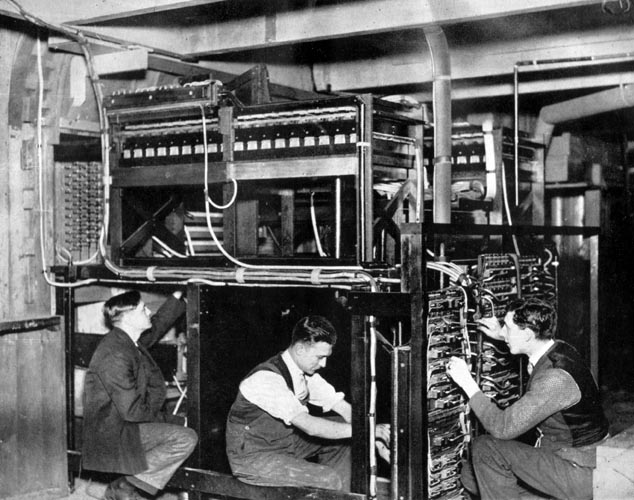
After years of fundraising efforts by the Alexandra Palace Organ Restoration Committee, Henry Willis III - grandson of the original builder - undertook a comprehensive rebuild of the organ in 1929. This restoration not only repaired the damage but enhanced the instrument with modern innovations while preserving its Victorian character.
The rebuilt organ was heralded as "The Finest Concert Organ in Europe" and became famous through a series of legendary EMI recordings that captured its magnificent sound for posterity. These recordings, later reissued as classics, would prove crucial in demonstrating the organ's exceptional quality during future preservation battles.

World War II brought renewed challenges as the Palace was once again requisitioned, and the organ suffered further damage and neglect. By the 1950s, the instrument had been dismantled for storage, with its magnificent façade looking silently down on an empty Great Hall.
In 1969, the Greater London Council (GLC), which had taken control of Alexandra Palace, advertised the organ for sale, hoping to find a buyer from overseas. This threat galvanized supporters, including the Alexandra Palace Arts Society, which demonstrated public interest by organizing sold-out concerts in the Great Hall.
Despite these efforts, the organ was sold multiple times before being purchased by Henry Willis IV, great-grandson of the original builder, who held it in trust for the nation.
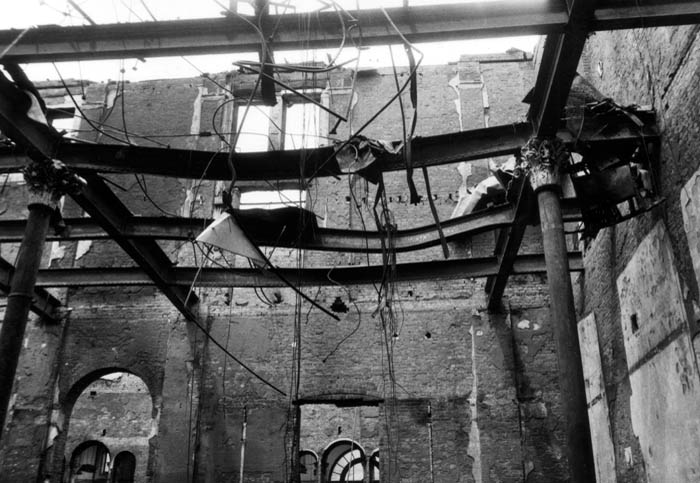
Just as hopes were rising for the organ's restoration, disaster struck again in 1980 when a devastating fire destroyed the Great Hall and the shell of the Willis organ. For many, this seemed to be the final chapter in the organ's troubled history.
However, at a public inquiry into the future of the burned-out building, an overwhelming majority of speakers insisted that not only should the Palace be rebuilt, but the famous Willis organ should be restored and returned to its rightful place.
In this new climate of support, the Alexandra Palace Organ Appeal was launched in 1982 by the violinist Yehudi Menuhin. Through initiatives like the "Adopt a Pipe" scheme and matching funding from the Alexandra Palace Board, restoration work began at the Willis factory in 1985.
The great day for organ supporters came in 1990 when the partially rebuilt instrument sounded for the first time in public in over 50 years, proving that the restored organ in the rebuilt Great Hall could once again produce the matchless combination that had brought fame a century earlier.
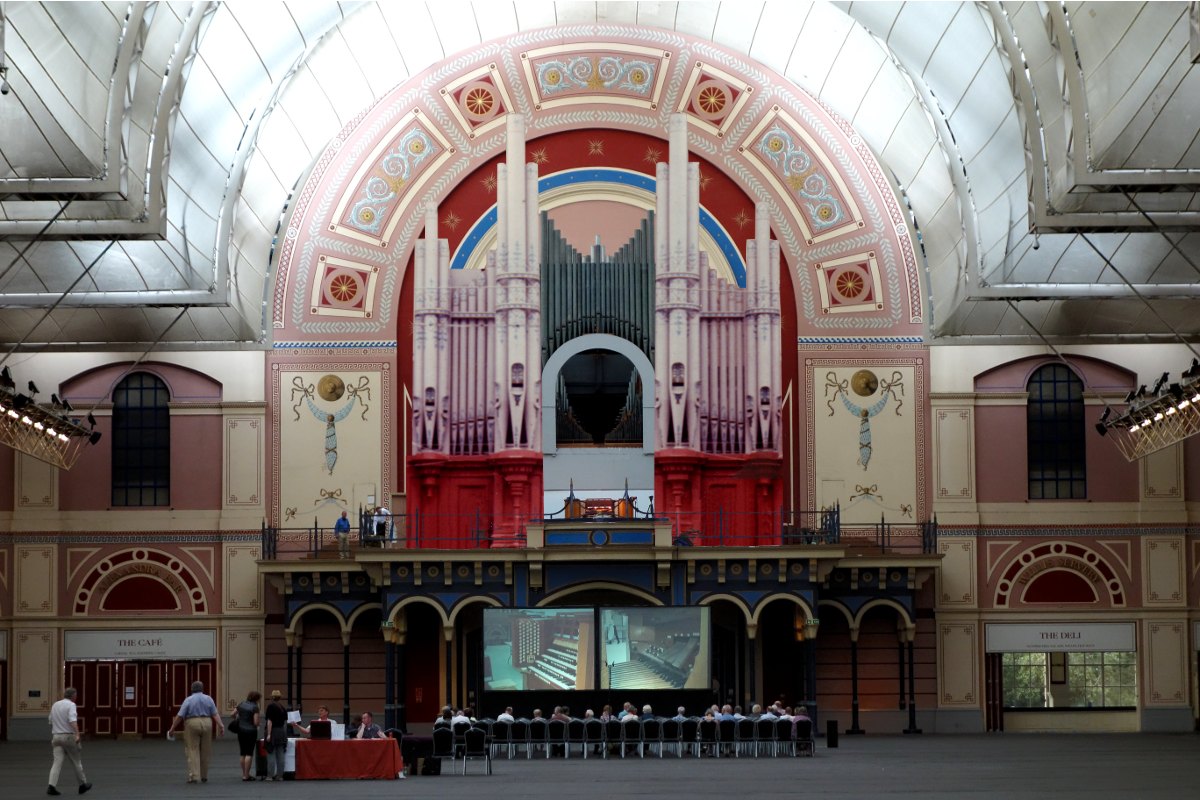
Today, significant portions of the Alexandra Palace Organ have been restored and are regularly played, while work continues to complete the full restoration to its 1929 specification. The Alexandra Palace Organ Appeal remains dedicated to raising the funds needed to return this magnificent instrument to its former glory as "The Finest Concert Organ in Europe."
Through concerts, recordings, and educational programs, the Appeal works to ensure that this remarkable piece of our musical heritage will continue to inspire and delight audiences for generations to come.
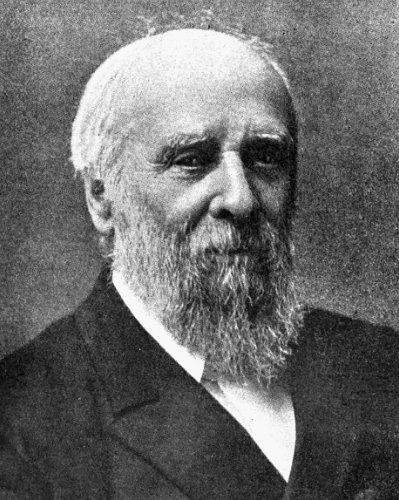
"Father" Henry Willis (1821-1901)

Henry Willis III
(1889-1966)
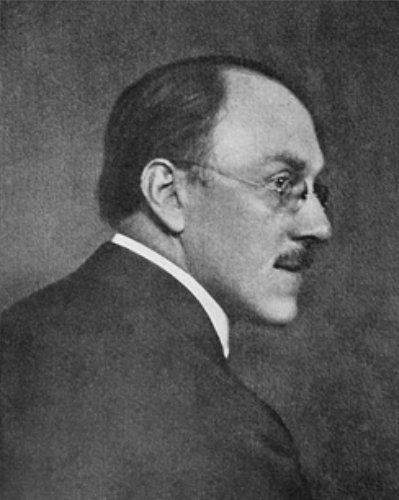
George Dorrington Cunningham (1878-1948)

Henry Willis IV
(1927-2018)

